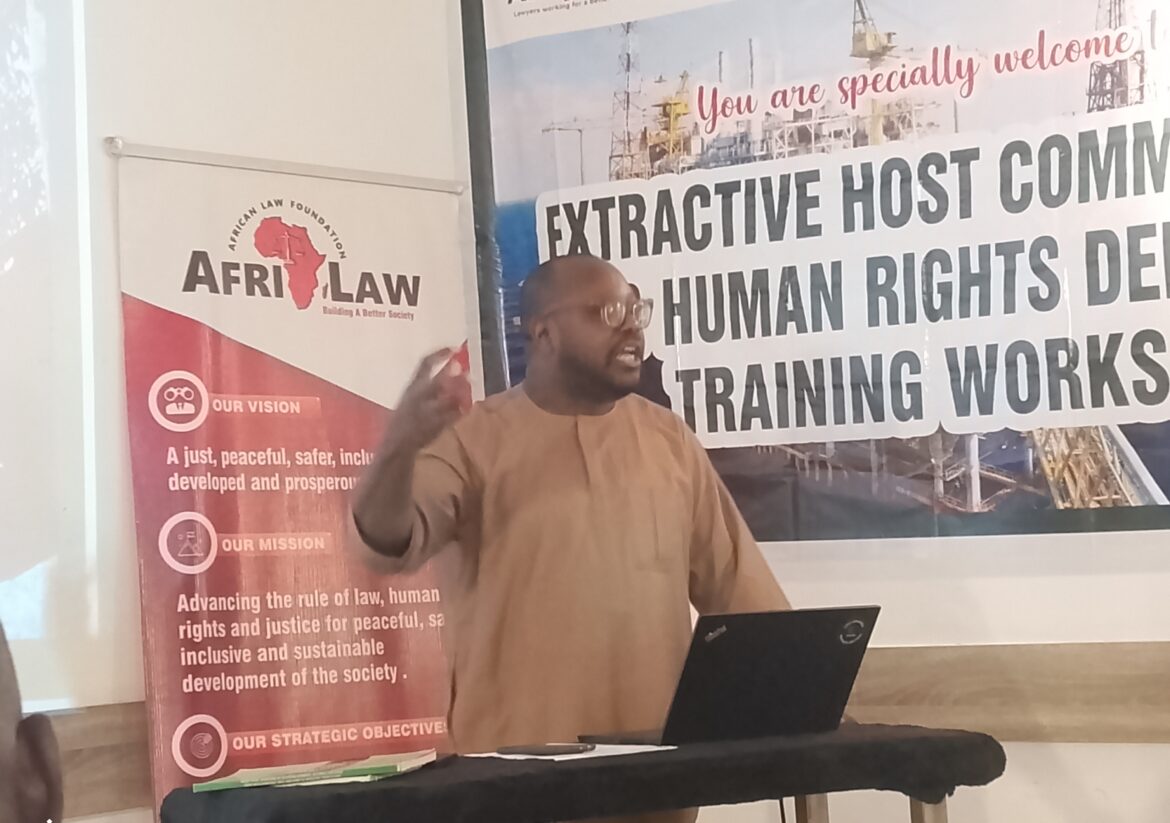
A legal practitioner and human rights expert, Chinwike Okereke, has called for an amendment to Section 2 of the 1999 Constitution to make its provisions on socio-economic rights and government responsibilities justiciable and enforceable.
Okereke, the Founder and Chief Executive Officer of the African Law Foundation (AFRILAW), Abuja, argued that the continued non-justiciability of Section 2 was a major obstacle to good governance and accountability in Nigeria, as citizens currently lack the constitutional means to challenge governments when essential social and economic services are not provided.
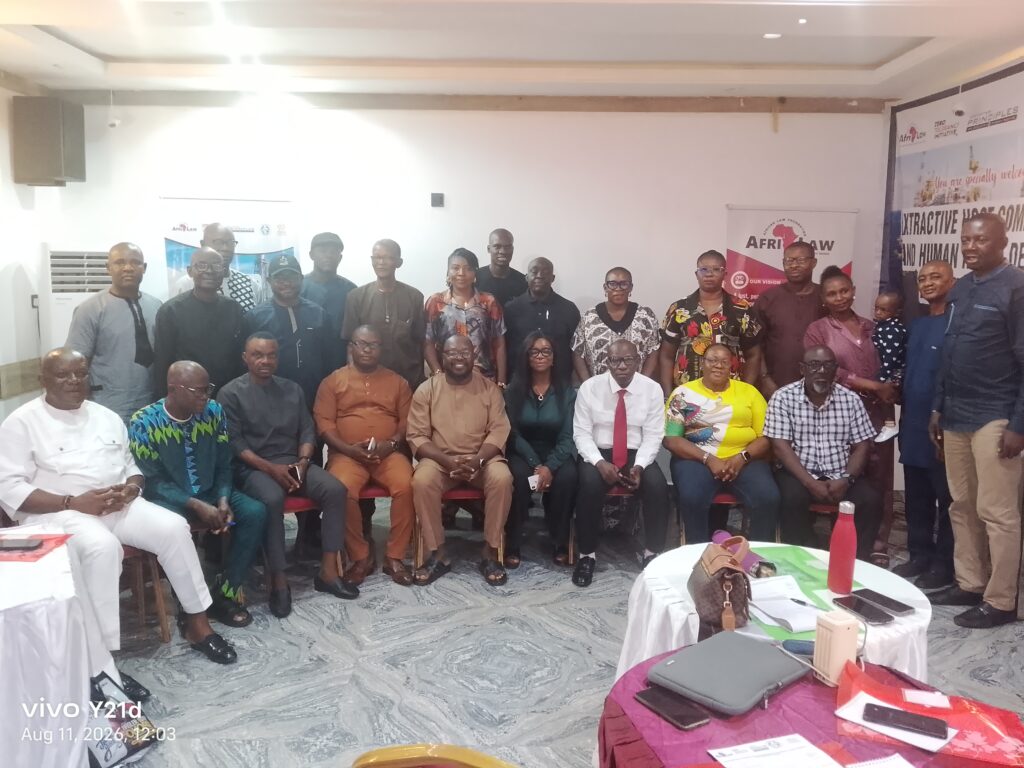
He made the call on Tuesday at a training workshop organised by AFRILAW in collaboration with Extractive Host Communities and Human Rights Defenders in Umuahia.
Speaking on the topic, “The Human Rights Defender,” Okereke said every country that belongs to the United Nations was expected to uphold fundamental human rights principles, adding that the responsibility also extended to businesses and companies operating within those countries.
He explained that under the first pillar of the United Nations Guiding Principles on Business and Human Rights, states have the responsibility to protect individuals against human rights abuses within their territories and jurisdictions, including abuses linked to business enterprises.
According to him, businesses, including institutional investors, are equally expected to respect human rights by avoiding practices that infringe on the rights of others and addressing adverse human rights impacts associated with their operations.
Okereke further stated that anyone who acquires a company also inherits its corporate responsibilities and liabilities, including any unresolved injustices associated with its operations.
He said access to remedy was an important component of human rights protection, explaining that affected persons must have avenues to seek redress for harm resulting from business activities through judicial and non-judicial mechanisms provided by the state, as well as grievance mechanisms established by businesses.
The human rights expert stressed the need for businesses operating in conflict-affected areas to take human rights considerations seriously and conduct proper human rights risk assessments.
He advised business owners to identify potential adverse human rights impacts associated with their operations and regularly obtain feedback from both internal and external stakeholders, particularly communities and individuals affected by their activities.
Okereke also charged business enterprises to comply with all relevant laws and international human rights standards.
Turning to constitutional reform, the lawyer said Nigeria could not achieve sustainable good governance if citizens lacked the legal means to hold governments accountable for failures in the provision of basic social and economic services.
He said, “Good governance will keep eluding us because it means that we cannot hold the government accountable when they fail to provide those socio-economic services and rights, the things we need as citizens.
“There is a need for us to critically review that section and remove that notion of non-justiciability, so that the government can be held accountable when they fail to provide education, health and other social and economic services that citizens need.
“This is the essence of government. If we remove these responsibilities from governors and governments, what else do citizens benefit?”
He maintained that the provisions of Section 2 should be given the same level of importance as Section 4 of the Constitution, which establishes the legislative and judicial framework for enforceable laws.
According to him, while there are established procedures through which citizens can seek judicial enforcement of laws made under Section 4, there is no equivalent mechanism for enforcing the socio-economic obligations contained in Section 2.
“We need to provide the same enforcement procedure that applies to Section 4 to Section 2, so that we can ensure that people’s lives are enhanced through the provision of the social and economic needs covered under Section 2,” he said.
Okereke further argued that constitutional reform was necessary to ensure that citizens were not left without legal remedies whenever governments failed to provide basic services.
“How can you say citizens cannot challenge government when the basic things they need are not provided? What is the government doing? How do we now hold them accountable?” he asked.
He said the absence of enforceability had contributed to a situation where citizens were repeatedly presented with budgetary promises and huge allocations for social services, while allegations of corruption, mismanagement and wastage persisted without adequate accountability.
The lawyer noted that relying solely on institutions such as the Economic and Financial Crimes Commission (EFCC) and the Independent Corrupt Practices and Other Related Offences Commission (ICPC) to recover misappropriated public funds was not enough to guarantee good governance.
“For us to ensure accountability and good governance, Section 2 of the 1999 Constitution must be justiciable and enforceable. That is where we can ensure accountability and make sure we hold our political leaders accountable to give us what we need as citizens of the country,” he said.