The Senior Monitoring and Evaluation Officer of TAF Africa, Terfa Tyokase, has said the Independent National Electoral Commission (INEC) is legally mandated to provide assistive devices and other necessary support to enable persons with disabilities to participate independently in Nigeria’s electoral process.
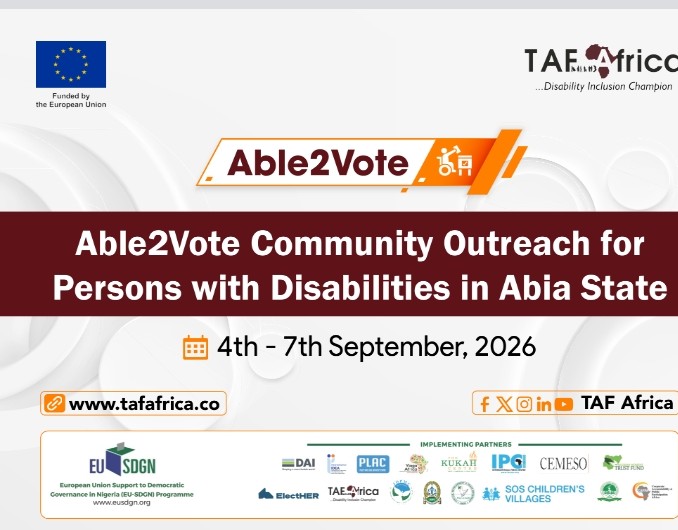
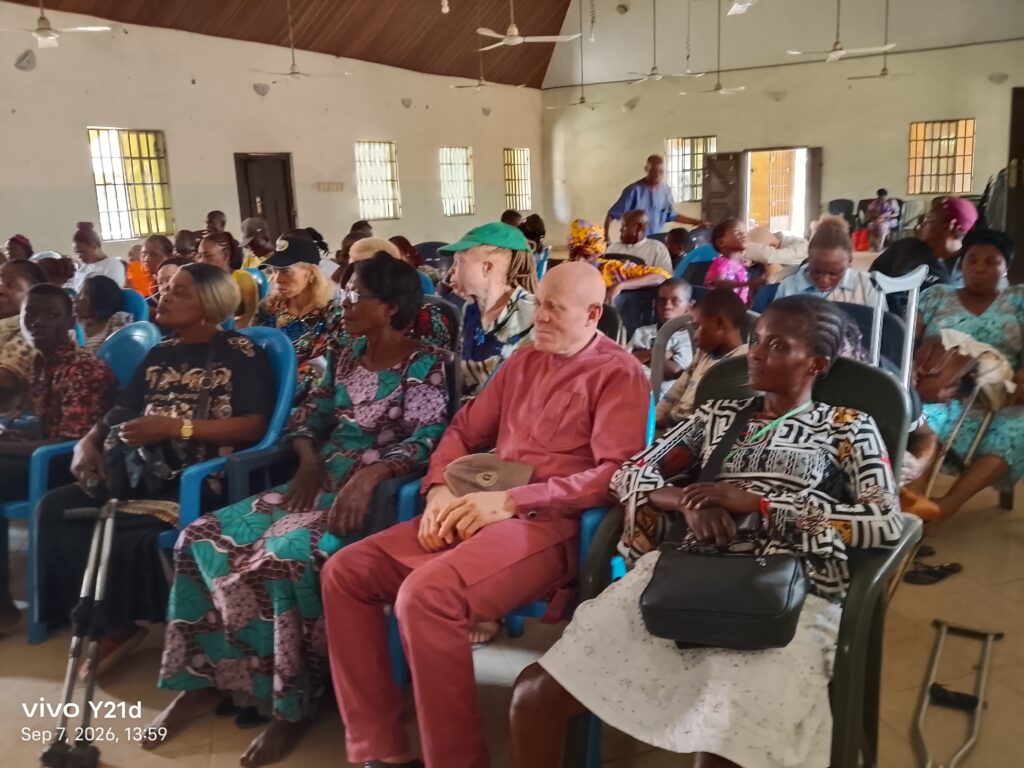
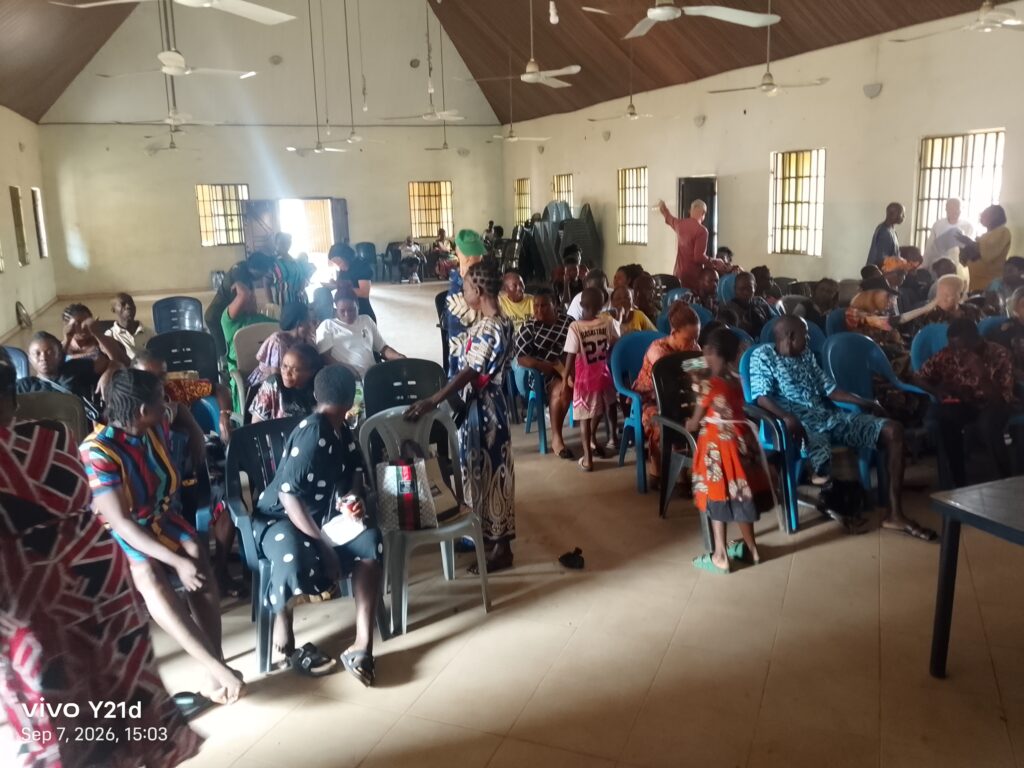
Tyokase stated this on Monday while speaking during a sensitisation programme tagged Able2Vote Community Outreach for Persons with Disabilities in Abia State, organised by TAF Africa in Umuahia.
He emphasised the need for government and relevant electoral authorities to ensure that voting is accessible, inclusive and convenient for persons with disabilities.
According to Tyokase, the Electoral Act 2022, as amended in 2026, requires INEC to provide appropriate assistive devices for persons with disabilities who need them to cast their votes.
He explained that such devices include Braille ballot guides for persons with visual impairment, while sign-language interpreters or large embossed posters are expected to assist persons with hearing impairment.
Tyokase also highlighted Form EC40H, which he said enables INEC to collect data on persons with disabilities across polling units nationwide.
He explained that the information was essential for effective electoral planning, particularly in identifying the specific needs of persons with disabilities and ensuring that appropriate facilities and support are made available during elections.
“Before 2022, INEC registration was not capturing persons with disabilities. There was no disability status for persons with disabilities. But after the law was amended in 2022, it became mandatory that INEC will take data of persons with disabilities to be able to plan for them,” he said.
On persons who are blind, Tyokase said INEC was expected to provide Braille ballot guides to enable them to identify and vote for their preferred candidates or political parties independently.
He added that persons with low vision, including some persons with albinism, should be provided with magnifying glasses to assist them during the voting process.
Tyokase said the essence of the sensitisation programme was to educate persons with disabilities about their political and electoral rights and encourage them to participate actively in elections.
He noted that political participation should go beyond merely casting a ballot, stressing that persons with disabilities must be able to vote independently, contest elections, obtain nomination forms and seek elective positions.
Citing World Bank statistics, Tyokase said persons with disabilities constitute about 16 per cent of Nigeria’s population, with a significant number being adults who are eligible to vote.
He described persons with disabilities as a major political constituency and urged them to understand the importance of their participation in the democratic process.
“Our aim here is to ensure that they know their right and they come out to vote. And not just to vote; they are also able to vote. They are also to be voted for. They can also go out, pick nomination form and contest and become elected into political offices,” he said.
According to the advocate, INEC provides a Braille ballot guide designed to assist persons with visual impairment to identify and select their preferred political party on the ballot paper.
He explained that the ballot paper could be inserted into the Braille ballot guide, allowing a voter with visual impairment to independently trace and identify the appropriate position of the party he or she intends to vote for.
However, he noted that such assistive devices are deployed to polling units where INEC has information that persons with visual impairment are registered to vote.
Tyokase stressed that persons with disabilities who registered before 2022 and have not updated their disability information may therefore miss out on some of these facilities because INEC may not know the specific polling units where the devices are required.
The advocate also listed other assistive devices provided by INEC, including magnifying glasses for persons with visual impairment and large embossed posters containing voting instructions for persons with hearing impairment.
He explained that the large embossed posters are displayed at polling units to enable voters with hearing impairment to read important instructions and understand the voting process.
Tyokase further disclosed that INEC provides priority voting for persons with disabilities, meaning that they are not expected to remain in the general queue with other voters.
According to him, persons with disabilities should be given priority at polling units to enable them to enter, vote and leave without unnecessary delays.
He also highlighted Form EC40H, which he said is used to capture information about persons with disabilities who registered before 2022 but may not have been included in INEC’s disability database.
Tyokase urged persons with disabilities who fall into this category to request the form at their polling units and ensure that their information is properly captured so that INEC can update its records and provide appropriate assistive devices during subsequent elections.
He listed the Braille ballot guide, magnifying glass, large embossed poster and Form EC40H among the measures and tools available to support persons with disabilities during elections.
The advocate advised persons with disabilities to prepare adequately ahead of election day by ensuring that they have their Permanent Voter Cards (PVCs) and know their designated polling units.
He urged eligible voters to arrive at their polling units early and approach electoral officials peacefully.
“When you go there, not to go and fight, but to go politely and introduce yourself to the polling official. I am a person with disability, and I would like to be attended to first,” he said.
Tyokase also encouraged persons with disabilities who require assistance to go to the polling unit with a trusted person who can assist them in the voting process.
The advocate stressed that possessing a PVC remains the starting point for participating in Nigeria’s electoral process, urging anyone who had not registered to take the necessary steps to become eligible to vote when registration opportunities are available.
He also warned persons with disabilities against selling their votes, describing the practice as a direct sacrifice of their future and dignity.
“Don’t sell your vote. If you sell your vote, you are selling your future. In fact, you are not selling your future. You are selling yourself,” he said.
Tyokase urged voters to reject attempts to exchange their votes for money, food items or other temporary benefits, stressing that the value of their democratic rights was far greater than any immediate material inducement.
The advocate further appealed to persons with disabilities to avoid violence and political confrontation at polling units.
He urged them to vote peacefully, avoid political arguments and remain vigilant against misinformation during the election period.
Tyokase warned that false information would likely circulate before and during the elections, including fabricated claims that a particular political party had already won votes at polling units even before voting had commenced.
He also cautioned against messages falsely claiming that disability organisations or groups had endorsed particular candidates and directed persons with disabilities to vote for them.
Tyokase advised voters to disregard unverified information and rely only on trusted and credible sources when making decisions during the electoral process.
In an interview, one of the participants and Secretary of the Persons With Disabilities group in Umuahia South Local Government Area, Joan Oluchi Irozuru, urged her colleagues to actively participate in forthcoming elections and exercise their civic responsibilities without allowing their physical conditions to limit their involvement in the democratic process.
Irozuru encouraged persons with disabilities to come out en masse to vote, stressing that everyone has a role to play in shaping the future of the country and should not feel excluded or unrecognised because of a disability.
She said, “Everybody should come out. Nobody should feel that he is not recognised. We should come together and put our efforts. We should not think that this condition will make us unavailable when things are happening. We should be inclusive.”
She noted that persons with disabilities should see themselves as important members of society who have the right to participate in political and electoral activities like every other citizen.
Speaking on whether government had done enough to provide facilities that would enable persons with disabilities to participate effectively in voting, Irozuru acknowledged the efforts made so far by government.
According to her, some measures have been introduced to make public facilities and the electoral process more accessible to persons living with disabilities.
She explained that ramps have been provided in some places to assist persons who use wheelchairs or have difficulty climbing steps, while hearing aids have also been provided to support persons with hearing impairment.
“Government has really tried because persons with disabilities, when they want to go up in a situation where there is a step, there is a ramp that will help you to move. People that are deaf, they have given some hearing aids to make them feel that they belong to each other,” she said.
Irozuru, however, emphasised the need for continued inclusion and greater awareness to ensure that no person with disability is left behind in the electoral process.