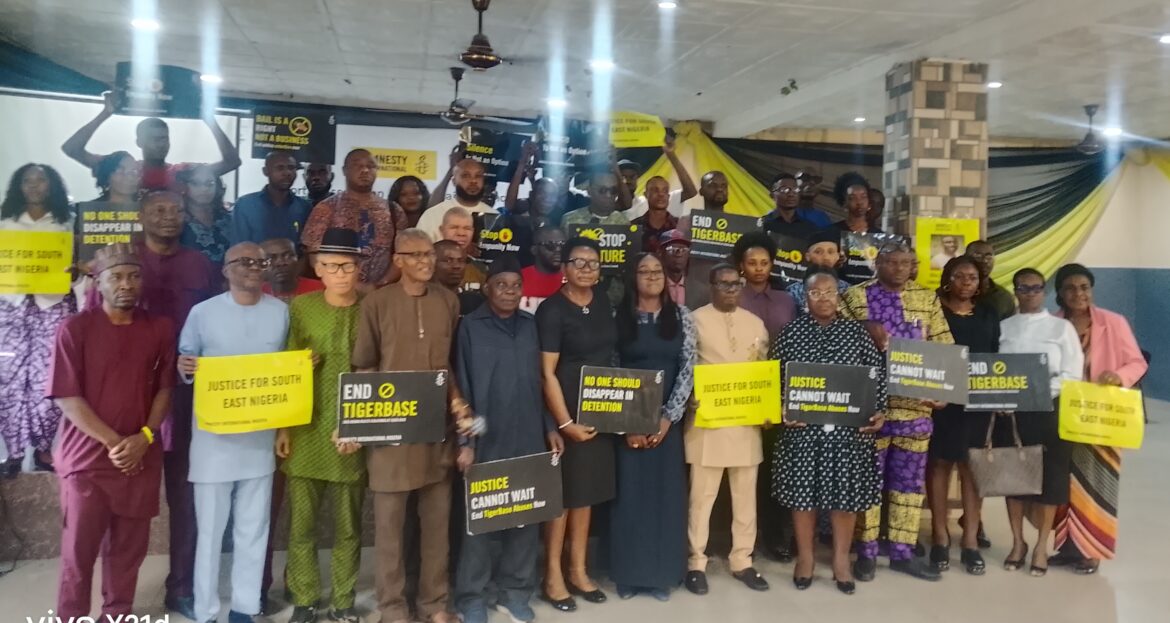
Amnesty International Nigeria has called on the Federal Government and other relevant authorities to urgently address alleged human rights violations, arbitrary arrests, unlawful detention, enforced disappearances, torture, unlawful killings and other atrocities reported across the Southeast.
The organisation made the call on Thursday in umuahia Abia State during the presentation and campaign launch of its reports, titled “A Decade Of Impunity: Attacks And Unlawful Killings In South-East Nigeria” and “Tiger Base Of Atrocities: Human Rights Violations By Nigeria Police Anti-Kidnapping Unit In Owerri.”
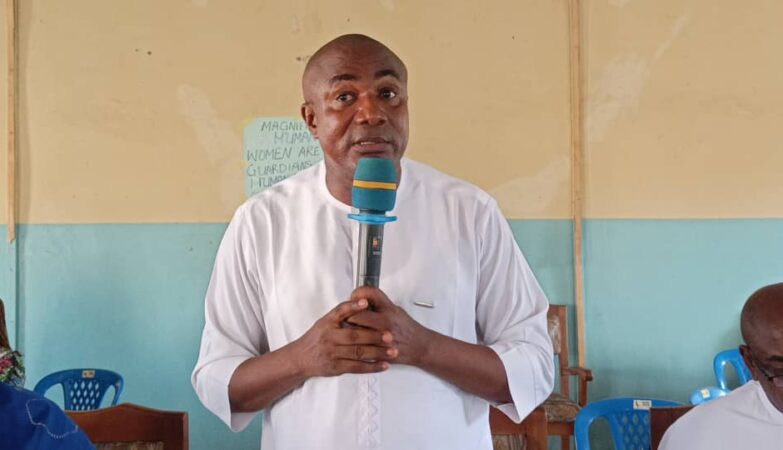
Speaking during the event, Amnesty International Nigeria representative, Benedicta Ofili, said the objective of the programme was to bring the organisation’s findings on alleged human rights abuses in the region to the attention of citizens, civil society organisations, security agencies and relevant authorities.
Ofili said Amnesty International’s reports were designed to document evidence of alleged violations, educate citizens about their rights and mobilise them to demand accountability from government.
She explained that the organisation usually gives government authorities the opportunity to respond to findings contained in its reports before publication.
According to her, right-of-reply letters concerning the reports on the Southeast were sent to the five state governors in the region, although substantive responses were not received.
She, however, said there had been some commitments from the leadership of the Nigeria Police Force regarding allegations surrounding the facility popularly known as Tiger Base, including assurances that reported incidents would be investigated.
Ofili stressed that evidence-based research and reliable data remained important tools for empowering citizens to understand their rights and seek redress whenever such rights were violated.
She expressed concern over allegations surrounding the activities of the Joint Task Force (JTF) in Imo State, including claims that travellers were intercepted, taken to unknown locations and threatened with death.
She said the reported incidents formed part of a wider pattern of insecurity and alleged human rights abuses that Amnesty International had documented across the Southeast.
According to her, investigations by the organisation uncovered cases where individuals were allegedly arrested and detained, while their families were left without information about their whereabouts.
She alleged that in some cases, families were forced to raise money to secure the release of detained relatives, including claims that unidentified police officers demanded cash payments.
“If the government does not nip insecurity in the bud, it skyrockets into diverse dimensions, and that is what you are seeing in the JTF,” she said.
Ofili said reports that individuals were allegedly picked up in states such as Abia and Anambra and taken to Imo State for detention without their families knowing their whereabouts demonstrated the scale of the security and human rights challenges confronting the region.
She urged the government to rise to its constitutional responsibility of protecting every Nigerian, irrespective of location, warning that citizens should not wait until they became victims before demanding accountability.
She said Amnesty International hoped the report presentation would raise awareness, strengthen citizens’ understanding of their rights and compel government authorities to take concrete action.
Ofili maintained that citizens have the right to freedom of movement, access to legal representation and fair hearing, stressing that no person should be detained without lawful justification or denied access to justice.
She also called on legal professionals, civil society organisations, activists and citizens across the Southeast to join the campaign for accountability and demand investigations into alleged atrocities, unlawful killings, enforced disappearances and illegal detention.
According to her, Amnesty International had documented serious concerns relating to Tiger Base and believed that other cases of abuse could exist in detention facilities yet to be identified.
“We need the government to rise up to the occasion,” she said, urging authorities to ensure that anyone found responsible for human rights violations was properly investigated and held accountable in accordance with the law.
Presenting the first report, Amnesty International researcher, Maurice Chukwu, said the study examined human rights violations and insecurity in the Southeast, particularly between 2021 and 2024, while documenting incidents dating from 2016 through December 2024.
He said the research focused mainly on insecurity, including documented attacks, killings and abductions involving both state and non-state actors.
According to him, state actors examined included the police, Department of State Services (DSS) and military, while non-state actors included the Indigenous People of Biafra (IPOB), criminal groups and other armed actors operating in the region.
Chukwu said the report also examined the impact of sit-at-home orders imposed during the height of the crisis, including their effects on livelihoods, education, freedom of movement, women and children.
He said the study documented civilian harm resulting from the insecurity, including loss of livelihoods, destruction of homes, disruption of education, school closures and displacement of communities.
He added that the continued impact of Monday sit-at-home orders was examined, particularly in Abia State and Aba, where residents had continued to experience restrictions on economic activities and movement, although some markets had recently begun opening on Mondays.
Chukwu said particularly disturbing were reported cases where women, children and teachers were allegedly beaten or subjected to violence for violating sit-at-home orders while attempting to attend schools or carry out their daily activities.
He noted that although there had been some improvements, the situation had not been completely resolved, adding that governments in states such as Anambra and Abia had introduced measures aimed at encouraging residents to return to work on Mondays.
A major concern highlighted in the report was the issue of enforced disappearances, particularly involving people whose relatives or communities alleged were members or supporters of IPOB.
Chukwu said Amnesty International documented 18 cases of enforced disappearance involving individuals allegedly taken into custody by security agencies.
He cited the case of Sunday Mgbebi, who was reportedly detained for four years before his release, adding that his wife died during the period of his detention.
The report also documented alleged cases of arbitrary arrests, torture, ill-treatment and destruction of homes, particularly at the height of the crisis in Imo State and parts of Abia State.
Chukwu said in some instances, homes were allegedly destroyed because their owners were accused of being members or supporters of IPOB.
He described such actions as collective punishment, stressing that destroying a home inhabited by children, spouses, parents and other relatives effectively punishes people who may have had no involvement in the alleged offence.
He said the report ultimately called for accountability and justice through thorough investigations, prosecution of persons found responsible and effective remedies for victims of the crisis.
Chukwu said the research covered five Southeast states comprising Abia, Anambra, Ebonyi, Enugu and Imo.
He explained that because of the security situation during the period under review, researchers conducted interviews in different locations, including Asaba, Enugu and Abuja.
According to him, Amnesty International conducted 100 interviews, comprising 68 physical interviews and 32 telephone interviews, with 44 of the participants being women.
He said those interviewed included survivors of violence, family members and relatives of victims, as well as people affected by enforced disappearances.
He added that researchers interviewed 18 people specifically in connection with the chapter on enforced disappearances, including relatives of people who disappeared and individuals who were allegedly subjected to disappearance and later found.
Beyond interviews, he said Amnesty International conducted extensive desk research, including reviews of media reports, court documents, hospital records, autopsy reports and other relevant materials.
Chukwu said the organisation also cross-checked information with multiple sources, including government sources, in an effort to verify its findings.
He said interviews were conducted in Igbo and English to ensure participants understood the questions and could express themselves freely.
He explained that researchers obtained informed consent before every interview and informed participants that participation was voluntary and that they could decline or stop the interview at any time.
Speaking on the campaign, Amnesty International campaigner, Samson Abobarin, called on stakeholders across government, security agencies, justice institutions, civil society and the media to take concrete steps towards securing justice and accountability for persons allegedly missing or subjected to unlawful detention in the Southeast.
Abobarin urged government and security agencies to investigate credible allegations, improve civilian protection, strengthen safeguards and provide information to families seeking answers about the whereabouts of their loved ones.
He also called on justice and human rights institutions to strengthen complaint mechanisms, support access to justice and monitor detention facilities, noting that some detention centres, including Tiger Base, remained in poor condition despite reported improvements.
He urged civil society organisations to support affected families and sustain advocacy campaigns by sharing photographs and information about missing persons through social media and other platforms.
He cited the sustained campaign for Dr. Ifeanyi and his wife as an example of how public pressure could contribute to securing the release of persons allegedly held in detention.
Abobarin also stressed the importance of the media in amplifying the concerns of affected families and keeping alleged human rights abuses in the public domain.
The organisation announced plans to submit petitions to the governors of the five Southeast states covered by the report, urging participants to sign the petition through a QR code provided at the event.
The petition seeks justice and accountability for missing persons and action to address wider human rights concerns across the region.
The Amnesty representative challenged government agencies and other representatives at the event to make concrete commitments that could be taken back to their respective institutions and translated into action.
He stressed that supporting affected families was an important part of the campaign, noting that anyone could become a victim of enforced disappearance or unlawful detention.
He concluded with three key demands: “End impunity, protect the people and demand answers.”
Meanwhile, one of the victims’ relatives, Mrs Miriam, gave an emotional account of the disappearance of her husband, Emmanuel, who she said was arrested on April 25, 2021, and had not been seen or heard from since.
Miriam said her husband had returned from work when he was arrested, adding that one of his friends later informed her that he had been taken away by a policeman and questioned.
She said she was unable to visit the place where her husband was allegedly arrested because she was eight months pregnant at the time.
According to her, she had not seen her husband for five years and her son had grown up without knowing his father.
She appealed for information on his whereabouts and called for his release so that her son could have the opportunity to know his father.
Other relatives also gave accounts of alleged disappearances and killings in Abia State.
Mrs Chinwendu Chidiebere spoke about the disappearance of her husband, Chidiebere Egbe, while Nicolas recounted the alleged killing of two of his sons.
Emmanuel Agwu also spoke about the number of lives allegedly lost and people who remained in detention, calling for authorities to provide answers to families searching for their loved ones.
Amnesty International said the testimonies underscored the urgent need for government authorities to investigate allegations of unlawful arrests, enforced disappearances, torture and killings and ensure that victims and their families receive justice and appropriate remedies.
The organisation maintained that greater public awareness, reliable information and sustained advocacy were essential to ending impunity and strengthening respect for human rights across the Southeast and Nigeria as a whole.
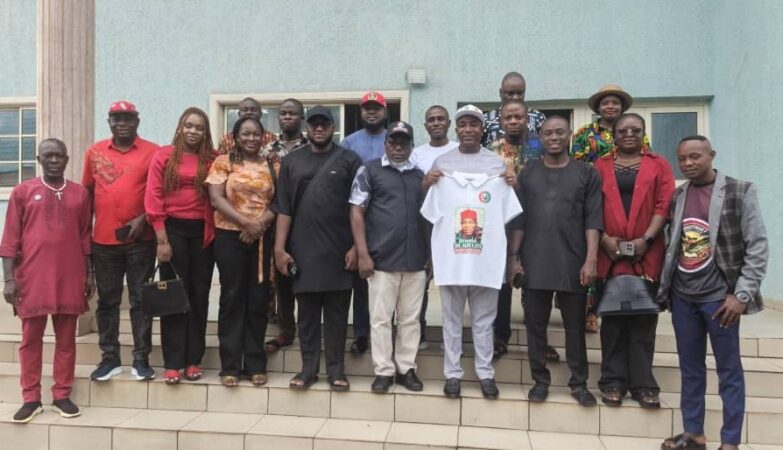
Our Correspondent reports that some stakeholders present during the event presented their goodwill messages.